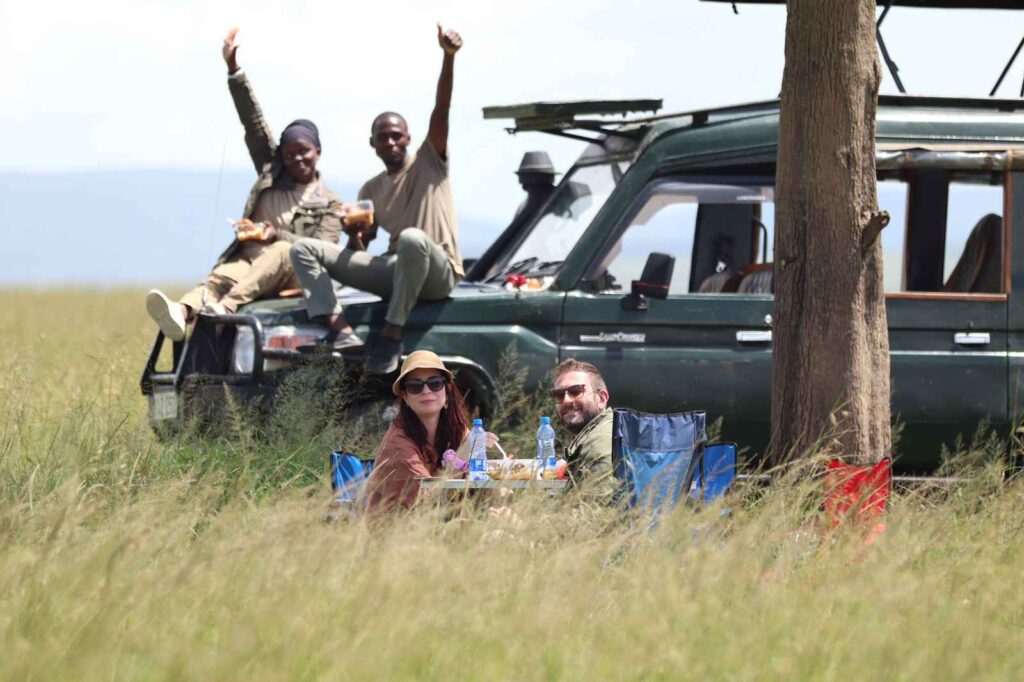
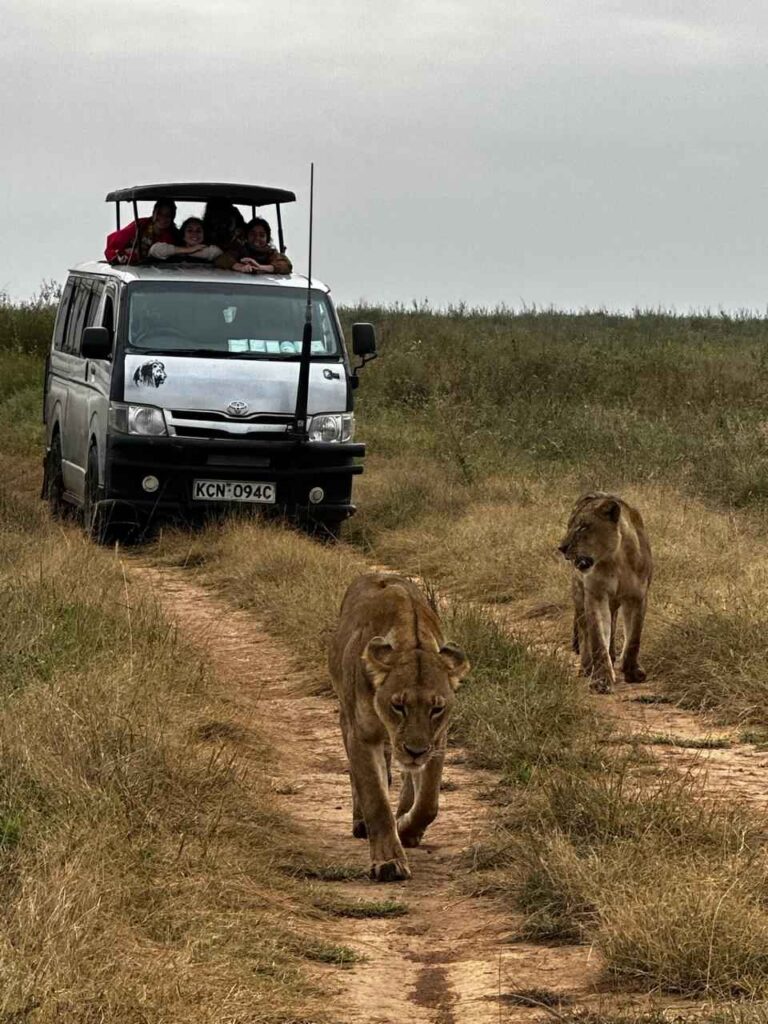
A Kenyan safari is often described as a trip of a lifetime, but what most travellers do not realise is that the quality of that experience rests almost entirely on one person: your guide. While a high-end 4×4 Land Cruiser and luxury tented camps set the stage, the true bridge between you and the wild is the expert behind the wheel. Kenya safari guides are far more than drivers. They are naturalists, master trackers, cultural storytellers, and the ultimate guardians of your experience. Whether you are exploring the lush plains during the Green Season or tracking the Great Migration in the Mara, a great guide is the difference between simply seeing animals and truly understanding the wild.
1. The ‘Bush Eyes’: The Art of Safari Tracking
To the untrained eye, the Masai Mara or Amboseli might look like vast, unchanging stretches of golden grass. To a skilled local guide, that same landscape is a daily newspaper written in the dirt.
This skill, often called “bush eyes”, is honed over decades of immersion in the wild. An expert guide can spot the flick of a leopard’s tail in a dense yellowwood tree from half a mile away, or detect the scent of a fresh kill carried on the afternoon wind. Tracking goes far beyond finding footprints: it involves reading the age of a track, how much moisture remains in the overturned soil, and which way the surrounding grass has been pressed. These micro-details make all the difference, especially on a focused 3-Day Amboseli Safari where every game drive counts.
2. The Gold Standard: KPSGA Certification
In Kenya, professional safari guiding is a prestigious career path governed by the Kenya Professional Safari Guides Association (KPSGA). The KPSGA runs a rigorous, tiered certification system that ensures a uniform standard of excellence across the industry.
Entry Level
Covers essential wildlife biology, park geography, and first aid. The baseline every professional guide must meet.
3+ Years Field Experience
Requires deep knowledge of botany, astronomy, and advanced animal behaviour. A significantly harder exam.
The Elite Tier
Fewer than 50 Gold-level guides in all of Kenya. These individuals often contribute to conservation research and policy.
At Malee Safaris, we prioritise guides who have committed to this professional journey, so your safari is always led by a verified, passionate expert.
3. Beyond the Big Five: Cultural Storytelling
The soul of a safari is found not just in wildlife sightings, but in the stories that connect you to the land. Kenya safari guides frequently grow up in communities surrounding the national parks, giving them a perspective no guidebook can replicate.
They share living folklore: why the hyena walks with a limp in Maasai legend, or how the toothbrush tree (Salvadora persica) has served as a natural antiseptic for centuries. This cultural dimension, celebrated by Magical Kenya, transforms your holiday into a profound human connection. You are not just a tourist. You are a guest in their home.
4. The Birder’s Edge: Kenya’s 1,100+ Bird Species
Many first-time visitors focus solely on the Big Five, but a skilled guide opens your eyes to Kenya’s extraordinary world of ornithology. With over 1,100 bird species, Kenya is one of the world’s premier birding destinations. Expert guides can identify a Lilac-breasted Roller or Malachite Kingfisher by the flash of colour alone, and understand the migratory patterns of Palearctic birds passing through every year.
Even during a standard game drive, there is never a quiet moment. When the big cats are resting, the trees are alive with colour, song, and drama. It is a layer of the safari experience most travellers miss entirely without a great guide by their side. Explore our dedicated Safari Insight blog for more on Kenya’s birdlife.
5. Safety, Ethics and Responsible Wildlife Tourism
The Kenyan wilderness is unpredictable. A shallow river crossing at dawn can become dangerous by midday. Knowing exactly how much space to give a protective elephant matriarch, or how to position a vehicle without disrupting a cheetah hunt, requires years of experience and deep respect for wildlife.
Professional guides work in close partnership with the Kenya Wildlife Service (KWS) and adhere to a strict code of conduct:
-
No off-roading: Protecting the fragile root systems of savannah grassland and preserving the ecosystem for future generations.
-
Crowd control at sightings: Avoiding vehicle pile-ups that stress animals and spoil the experience for everyone present.
-
Leave No Trace: Ensuring “take only photos, leave only footprints” is a lived reality and not just a slogan on a brochure.
6. The Community and Conservation Impact of Local Guiding
When you book a safari with a local Kenyan guide, your travel spend creates a far wider positive impact than you might realise. A single guide often supports an extended family and contributes to school fees, healthcare, and community development projects in areas surrounding the parks.
Crucially, local guides are conservation’s first line of defence. Because their livelihood depends on a thriving ecosystem, they are among the most vocal opponents of poaching and habitat loss. Choosing locally-guided safaris means you are actively participating in a sustainable tourism model that protects the very animals you came to see, a philosophy at the heart of every Malee Safaris package.
Frequently Asked Questions
Guides use high-frequency radios and strong local networks to share sightings across the reserve. The best guides, however, rely on their own tracking and scouting skills to find exclusive, crowd-free wildlife encounters that most tourists never see.
While self-driving is technically permitted, it is strongly discouraged for first-time visitors. The Mara has no paved roads, making navigation genuinely difficult. More importantly, without a local guide, you are likely to drive past the majority of wildlife concealed in the tall grass. Check our Masai Mara destination guide for more.
Tipping is a standard and appreciated practice in the Kenyan safari industry. A general guideline is $10 to $20 USD per guest per day, depending on the quality of the experience and the length of your safari.
Kenya offers exceptional wildlife viewing year-round. The dry seasons (July to October and January to February) are generally considered peak times, but the Green Season offers lush landscapes, fewer crowds, and lower prices. A knowledgeable local guide will always know which season best suits your specific interests.
Ready to See Kenya Through an Expert’s Eyes?
Every Malee Safari is led by a vetted local guide who lives and breathes the spirit of East Africa. Let us craft your perfect safari, from the Mara to the coast.
Book Your Safari →Or browse our safari packages to find your perfect adventure.