
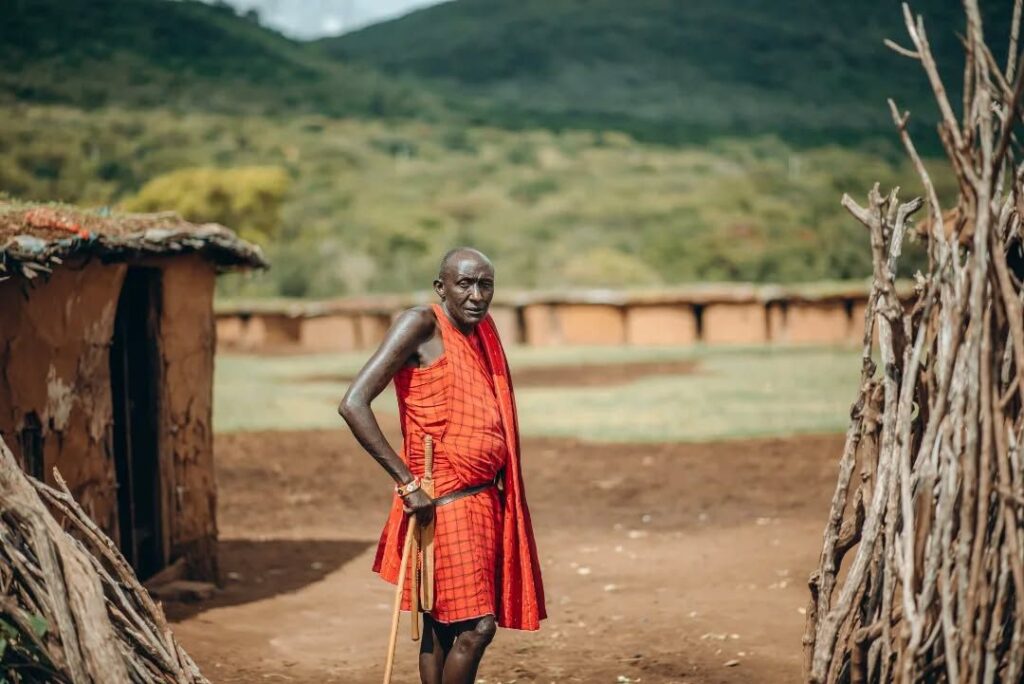
Cultural Safari Kenya: Meet the Maasai and Experience East Africa's Greatest Living Culture
More than a wildlife destination, Kenya is home to one of the world's most extraordinary living cultures. Here is your complete guide to meeting the Maasai on safari.
A cultural safari in Kenya offers something no wildlife-only itinerary can: a genuine human connection with one of the most fascinating peoples on earth. The Maasai have lived alongside Kenya's wildlife for centuries, herding cattle across the same plains where lions hunt and elephants roam, and their culture, language, traditions, and relationship with the natural world are unlike anything you will encounter anywhere else. This guide covers everything you need to know to experience authentic Maasai culture on safari, from the facts and traditions behind what you will see, to the experiences that go beyond the surface, and how to ensure your visit genuinely benefits the community you are meeting.
Who Are the Maasai? Key Facts for Your Cultural Safari in Kenya
The Maasai are an Eastern Nilotic people who live across southern Kenya and northern Tanzania, making their homeland one of East Africa's most visited safari regions. According to Kenya's 2019 national census, the Maasai population in Kenya alone reached 1,189,522 — more than three times the 377,089 recorded in 1989, making them one of the fastest-growing communities in the country. Their native language is Maa, a Nilo-Saharan language related to Dinka and Nuer. Most Maasai also speak Swahili and English fluently, particularly in tourist areas where many have become accomplished safari guides, lodge managers, and community conservancy rangers.
Location
Southern Kenya and northern Tanzania, primarily near the Masai Mara, Amboseli, Samburu, and the Great Rift Valley.
Language
Maa (Nilo-Saharan family). Most also speak Swahili and English. Over half the global Maasai population lives in Kenya.
Livelihood
Semi-nomadic pastoralists. Cattle are the central measure of wealth and status. Goats and sheep are also herded.
Housing
Inkajijik homes, built by women from mud, sticks, grass, and cattle dung. Clustered within a fenced enkang homestead.
Social Structure
Organised through a strict age-set system (iloshon). Each age group has specific roles — from junior warriors (ilaiok) to senior elders.
Spirituality
Monotheistic faith centred on Ngai (God). The laibon is the spiritual leader, healer, and diviner. Cattle are considered a sacred gift from Ngai.
Maasai Traditions and Culture: What You Will See and Learn on Safari
A cultural safari in Kenya that includes a Maasai village visit gives you access to a living society organised around principles that have changed little in centuries, even as the world around it has transformed dramatically. Understanding what you are seeing before you arrive makes the experience vastly richer.
The Age-Set System (Iloshon)
Maasai society is structured around a strict age-set system. Males move through recognised social stages from childhood through junior warriorhood (ilaiok or moran), senior warriorhood, junior elderhood, and senior elderhood. Each stage carries specific responsibilities, privileges, and restrictions. The most visible stage for safari visitors is the moran: young men between roughly 15 and 30 who have completed the Eunoto initiation ceremony. Morans are identifiable by their red shuka robes, elongated earlobes decorated with beaded ornaments, and ochre-coloured hair. They are the warriors and protectors of their community.
The Eunoto Ceremony
The Eunoto is the Maasai coming-of-age ceremony that marks a boy's transition to junior warrior. The ceremony lasts ten days or more. The horn of the Greater Kudu is used to summon all initiates. The ceremony involves singing, dancing, and significant ritual. After Eunoto, a young man's mother shaves his head, removing the long ochre-dyed hair he has worn as an ilaiok, and he begins the transition to senior warrior status. If you are fortunate to witness any Eunoto ceremony during a cultural safari in Kenya, you are seeing one of East Africa's most significant rites of passage.
The Adumu: The Jumping Dance
The adumu, often called the jumping dance, is performed by morans and is one of the most recognisable and genuinely meaningful traditions in Maasai culture. Young men form a circle, and individuals take turns jumping as high as possible in the centre while the group chants and sings. The height of the jump is a display of strength, endurance, and attractiveness to potential wives. It is not a performance invented for tourists. It is a practice with deep cultural roots, and witnessing it in a genuine community context is one of the highlights of any Maasai cultural experience.
Maasai Music and Storytelling
Maasai music is primarily vocal. Unlike many African traditions, Maasai music relies on the human voice rather than instruments, with chanting led by an olaranyani (song leader) and echoed by the group. Women sing lullabies and praise songs for their sons. Storytelling by elders transmits clan history, migration routes, survival knowledge, and moral codes across generations. The oral tradition is the Maasai library: everything important is memorised and passed down through story and song.
The Meaning of Maasai Colours and Beadwork
One of the first things you notice on a Maasai cultural safari visit is the extraordinary use of colour. Far from decorative, each colour in Maasai dress and beadwork carries a specific cultural meaning.
Red
Bravery, strength, and the blood of the warrior. The dominant colour of Maasai dress. Also said to scare away animals.
Orange
Hospitality and friendship. Often worn to signal a welcome to visitors and neighbouring communities.
White
Purity and good health. Associated with cattle milk. Worn during ceremonies and significant life events.
Blue
The sky and energy. Represents the vital role of rain and the heavens in Maasai life and spiritual belief.
Green
Land, health, and growth. Connection to the grass and the earth that sustains Maasai cattle and community.
Maasai Beadwork
Maasai beadwork is not merely jewellery. It is a communication system. The patterns, colours, and assembly of beaded collars, bracelets, and headpieces convey a person's age-set, marital status, clan identity, and social standing. Women are the primary creators of beadwork, and the skill is passed from mother to daughter over generations. When you purchase a handcrafted beaded item directly from a Maasai woman during a village visit, you are not buying a souvenir. You are buying a piece of a living artistic tradition, and the income goes directly to that woman and her family.
Cultural Safari Experiences in Kenya: What You Can Actually Do
The best cultural safari experiences in Kenya go far beyond a 30-minute village visit. Here is what is genuinely available and what each experience actually involves.
-
Maasai Village (Manyatta) Visit: A guided walk into a traditional enkang, the fenced homestead built by women. You will be welcomed by the headman or community elders, introduced to the inkajijik homes, observe the enkiama (cattle enclosure), and often be invited to watch or join the adumu jumping dance. A genuine visit lasts 60 to 90 minutes. The best visits include time with women who explain beadwork and will teach you to string beads yourself.
-
Fire-Starting Demonstration: Maasai men demonstrate the traditional technique of starting fire by rapidly rotating a hardwood stick against a softer board. This is a practical skill, not a performance. The method works in the field when you have no other source of flame. Being invited to attempt it yourself — and failing, as most visitors do — is genuinely humbling and often the most memorable five minutes of a cultural visit.
-
Adumu Jumping Dance Participation: Being invited to join the circle and attempt the adumu yourself is one of the most joyful experiences available on any cultural safari in Kenya. The morans will encourage you, the community will laugh warmly, and you will understand immediately why the jump requires the kind of athletic power that only a lifetime of active pastoral life produces.
-
Beadwork Workshop with Maasai Women: Sitting with Maasai women to learn the technique of bead-stringing and the meanings of pattern and colour is one of the most intimate cultural experiences available. The women are remarkably open about the significance of each piece and many speak enough English to explain the meanings directly without translation.
-
Walking with a Maasai Guide: Many lodges and camps in the Mara and Amboseli offer guided bush walks led by Maasai warriors. Beyond wildlife tracking, these walks reveal how the Maasai read the landscape: which plants treat specific ailments, where the predators sheltered the night before, how water is found during drought. This is ecological knowledge accumulated over centuries, and it is extraordinary to witness it applied in real time.
-
School Visit and Community Project: Some lodges and community conservancies facilitate visits to local Maasai schools or women's cooperatives. These visits have a direct economic benefit and give safari travellers a genuine picture of how tourism revenue funds education and healthcare in the surrounding community. Ask Malee Safaris to include a verified community visit when booking your safari package.
-
Overnight Maasai Cultural Immersion: A small number of community-run camps offer overnight stays within or adjacent to genuine Maasai communities, where guests eat traditional food, sleep in accommodation designed on Maasai principles, and participate in daily life rather than observing it. These are the deepest and most meaningful cultural safari experiences available in Kenya, and they require advance planning through a specialist operator like Malee Safaris.
How to Tell an Authentic Maasai Village Visit from a Tourist Show
This is the section that most safari blogs never write — and it is the most important one for any traveller who genuinely wants a meaningful cultural safari in Kenya.
Not all Maasai village visits are equal. Some villages near very popular tourist circuits have become almost entirely performance-based: a fixed route, a rehearsed welcome, a dance for the cameras, and a high-pressure handicraft market at the end. The community receives money and visitors leave with photos, but nobody has actually learned anything about Maasai culture. There is a significant difference between this and a genuine visit, and here is how to identify which one you are being taken to.
Signs of an Authentic Visit
In a genuine village, you will see the full range of daily life: women building or repairing homes, children doing school work, elders sitting in the shade discussing community matters, cattle being herded in or out of the enkiama at the right time of day. Your guide will be from the community, not a professional tour guide hired for the occasion. Questions are welcomed, not redirected. You will be invited to sit inside an inkajijik home (low ceiling, smoky, and authentic) rather than just photographed outside it. The handicrafts market, if there is one, is staffed by the women who made the items, not by traders.
Signs of a Tourist-Oriented Performance
The visit follows a strict 25-minute script. The jumping dance begins the moment you arrive, before any conversation or introduction. Everyone is in perfect costume. There is a guide standing at your elbow redirecting questions. The souvenir market is the largest and most prominent part of the visit. Your driver receives a commission for bringing you there. None of this means the experience is worthless, but it means it is entertainment, not cultural exchange. Ask your Malee Safaris guide directly before any village visit: is this community leasing its land to the lodge? Are the guides from this community? Has the lodge been working with this village for more than five years? These questions will tell you almost everything you need to know.
Beyond the Maasai: The Samburu Cultural Safari Experience in Kenya
Kenya's cultural richness extends well beyond the Maasai. In the arid north, the Samburu people offer a distinct and deeply compelling cultural encounter that most safari travellers never discover.
The Samburu are closely related to the Maasai, speaking a language also called Maa and sharing many social structures, including the age-set system and the central role of cattle. But the Samburu have adapted their culture and livelihoods to a harsher, more arid landscape than the Mara. Their beadwork is more elaborate, their jewellery more intricate, and their community conservancy model in northern Kenya has become one of the most successful examples of community-led conservation on the continent. Their relationship with camels, which the Maasai do not traditionally keep, is a distinctive aspect of Samburu daily life.
Malee Safaris includes genuine Samburu cultural experiences as part of all northern Kenya itineraries. Our Masai Mara guide covers how to combine a Mara cultural safari with a northern Kenya Samburu experience. Read our dedicated Safari Insight blog for cultural travel stories from both communities.
Responsible Cultural Tourism: Do's and Don'ts on Your Kenya Cultural Safari
Visiting any indigenous community carries responsibilities. The following guidelines ensure your visit contributes positively to the Maasai community and creates a genuine exchange rather than an extractive one.
| Do | Avoid |
|---|---|
| Ask your guide before taking any photograph of an individual. Many Maasai are happy to be photographed; some are not, and some charge a small fee, which is entirely reasonable. | Point a camera at people without asking. This is intrusive anywhere in the world and especially so in a community that has had complex experiences with being photographed by outsiders. |
| Buy handicrafts directly from the women who made them. Purchasing directly ensures the full sale price reaches the artisan rather than being split with a middleman. | Bargain aggressively for handicrafts. The prices are already low. Aggressive bargaining with an artisan who depends on that income is disrespectful regardless of cultural norms about negotiation. |
| Listen more than you speak during cultural explanations. Ask questions that show genuine curiosity: how does the age-set system work? What does this bead pattern mean? How is this plant used medicinally? | Arrive with fixed assumptions or make comparisons that impose external judgements on Maasai culture. The age-set system, polygamous marriage, and nomadic cattle herding all have deep rationale within the cultural and ecological context of the Maasai world. |
| Choose lodges and operators who have verified, long-term community partnerships where a portion of your nightly rate goes directly to the surrounding Maasai community. | Accept a village visit arranged on the road by an unknown driver. These stops are almost always commission-based, with the money going to the driver and a middleman rather than the community itself. |
| Dress modestly for village visits. Covered shoulders and knees are appropriate in most Maasai communities as a sign of respect for their own standards of dress. | Give sweets, money, or gifts directly to children. This creates unhealthy dependency and changes the economic dynamic of the visit in ways that harm the community over time. Donate to verified school programmes instead. |
Where to Find the Best Cultural Safari Experiences in Kenya
The quality of a cultural safari experience in Kenya depends enormously on where you go and who arranges your visit. Here are the primary destinations and what makes each one distinctive for cultural encounters.
Masai Mara: Kenya's Cultural Safari Heartland
The Masai Mara is named for the Maasai people who have lived here for centuries. The conservancies surrounding the national reserve are owned and leased by Maasai families, and staying at a conservancy camp means your fees directly support the community. Village visits arranged through Mara lodges with verified community partnerships are consistently the most authentic and well-organised in Kenya. The Mara's cultural experience benefits from the depth of the Maasai-guide relationship: many of the most accomplished wildlife guides in the Mara are Maasai themselves, bringing their knowledge of the land, its ecology, and their own culture into every game drive.
Amboseli: Cultural Safari with a Kilimanjaro Backdrop
The Amboseli ecosystem has one of the longest and most documented histories of Maasai-tourism coexistence in Kenya. The Amboseli Maasai have been involved in conservation since the park's earliest days, and the community relationships here tend to be more structured and transparent than in more commercially trafficked areas. A cultural visit in Amboseli often includes a more in-depth conversation with elders about the history of the Maasai relationship with the land, the national park, and the wildlife that the Maasai have protected for generations.
Samburu: Kenya's Most Underrated Cultural Safari Destination
For travellers who want to go deeper and further, northern Kenya's Samburu region offers a cultural safari experience that very few international visitors access. The communities here are less impacted by high-volume tourism, the landscape is dramatically different from the Mara, and the Samburu cultural encounter — including visits to traditional homesteads, workshops on beadwork, and walks with Samburu warriors — has a rawness and authenticity that is harder to find in the more visited south. Ask Malee Safaris about including Samburu in a combined Kenya itinerary via our safari packages page.
Frequently Asked Questions: Cultural Safari in Kenya
A cultural safari in Kenya combines wildlife game drives with structured experiences that allow you to engage directly with Kenya's indigenous communities, primarily the Maasai, but also the Samburu and other ethnic groups. These experiences include village visits, guided bush walks with Maasai warriors, beadwork workshops, cultural ceremonies, and overnight community immersions. The best cultural safaris are arranged through operators with verified community partnerships, where your visit and nightly stay fees contribute directly to the community you are visiting.
Most Maasai village visits arranged through lodges are included in the overall safari package rate, particularly at camps on community-leased land. When charged separately, a guided village visit typically costs between $20 and $50 per person. Stand-alone cultural day programmes can cost $80 to $150 per person depending on the depth and duration of the experience. Overnight community immersion programmes are priced as part of a broader itinerary and should be arranged through a specialist operator like Malee Safaris.
Yes, when done correctly. The Maasai have actively embraced tourism as an economic alternative to land conversion, and many communities welcome safari visitors as a primary source of income. What matters is how the visit is arranged. Visits through community conservancy partnerships, where income goes directly to the host community, are respectful and beneficial. Roadside stops arranged by commission-based drivers, where the money goes to a middleman rather than the community, are less so. A well-arranged cultural visit with a respectful traveller is something most Maasai hosts genuinely welcome.
Dress modestly with covered shoulders and knees as a sign of respect. Comfortable, closed-toe shoes are advisable as village paths can be uneven. Bring a small amount of local currency if you intend to purchase handicrafts directly from the women artisans. Do not bring sweets or gifts for children. A small camera is fine but always ask before photographing individuals. Curiosity, an open mind, and genuine questions about what you are seeing are the most valuable things you can bring to any cultural safari in Kenya.
Both are outstanding. The Masai Mara offers the deepest integration between Maasai culture and safari, as the entire conservancy system is built on Maasai land tenure. Most Mara guides are Maasai themselves, meaning the cultural education continues throughout every game drive, not just during a dedicated village visit. Amboseli offers a more structured and sometimes deeper conversation with elders, in a setting that is less commercially trafficked. For the most comprehensive cultural safari in Kenya, combine both within a single itinerary.
Ready to Experience Kenya's Living Culture on Safari?
Malee Safaris arranges verified cultural experiences with Maasai and Samburu communities across Kenya, all built into tailored safari itineraries that combine wildlife, culture, and the places that matter most.
Plan My Cultural Safari →Or explore our safari packages to find the right experience.