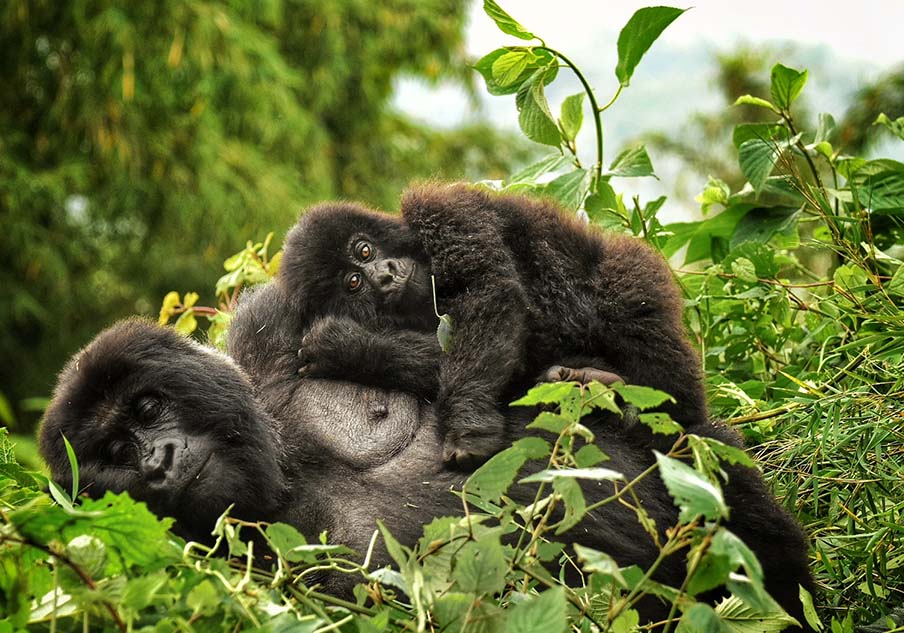
Gorilla trekking in Rwanda is widely considered one of the most profound wildlife encounters on Earth. Standing metres from a silverback mountain gorilla in the mist-draped bamboo forests of the Virunga Mountains, watching him survey his family, the youngsters tumbling over each other at his feet, is an experience that reorders your sense of what "wildlife" means. Rwanda has made this encounter more accessible, better organised, and more consistently rewarding than anywhere else in Africa. This guide covers everything you need to plan a gorilla trekking Rwanda safari in 2026, from securing a permit to choosing the right season and packing the right boots.
Malee Safaris designs East and Central Africa safari itineraries that integrate gorilla trekking in Rwanda with Kenya's finest wildlife experiences. Whether you are planning a standalone Rwanda gorilla safari or combining it with a Maasai Mara or Amboseli extension, this guide has you covered.
Why Rwanda for Gorilla Trekking?
Rwanda is not the only country where mountain gorilla trekking is possible, Uganda's Bwindi Impenetrable Forest and the Democratic Republic of Congo's Virunga National Park also offer the experience. But Rwanda has established itself as the gold standard for several compelling reasons.
Exceptional Infrastructure
Kigali International Airport is clean, efficient, and well-connected. Roads to Volcanoes National Park are paved and reliable. Rwanda's hospitality infrastructure is among the finest in Africa.
Safety & Stability
Rwanda consistently ranks as one of Africa's safest and most stable countries for travellers. Solo travellers, families, and older visitors all report feeling exceptionally secure throughout the country.
Conservation Success
Rwanda's commitment to gorilla conservation is internationally recognised. The mountain gorilla population has grown from around 600 in the early 2000s to over 1,000 today, one of conservation's rare genuine success stories.
Short Drive from Kigali
Volcanoes National Park is just 2.5 hours by road from Kigali. This proximity means gorilla trekking Rwanda is achievable as a two-day trip from the capital, ideal for travellers with limited time.
Volcanoes National Park: The Setting
All gorilla trekking in Rwanda takes place in Volcanoes National Park, situated in Rwanda's north-western corner near the border with Uganda and the Democratic Republic of Congo. The park sits within the Virunga Massif, a chain of ancient volcanoes that includes Mount Karisimbi (4,507m), Mount Bisoke, Mount Muhabura, Mount Sabinyo, and Mount Gahinga. The forested slopes of these volcanoes form one of the most biologically rich habitats in Africa.
The park covers approximately 160 square kilometres of afro-montane forest, bamboo zones, and open grassland at lower elevations. The vegetation changes dramatically with altitude, bamboo forest dominates between 2,500 and 3,000 metres, transitioning into Hagenia woodland above, and eventually into open moorland on the upper volcanic slopes. Mountain gorillas range across all of these zones depending on season and food availability.
Beyond the gorillas, Volcanoes National Park is home to golden monkeys (found nowhere else outside the Virunga Massif), forest elephants, buffalo, black-fronted duiker, and over 200 bird species. The park was famously home to Dian Fossey's Karisoke Research Centre, whose legacy continues to shape gorilla conservation globally. The Dian Fossey Gorilla Fund remains active in the region and welcomes visitors to learn about ongoing research.
Gorilla Trekking Permits: Cost & How to Book in 2026
A gorilla trekking permit is the single most important logistical step in planning a Rwanda gorilla safari, and in 2026, it requires advance planning.
How Much Does a Rwanda Gorilla Permit Cost in 2026?
As of 2026, a Rwanda gorilla trekking permit costs USD 1,500 per person. This fee is set by the Rwanda Development Board (RDB), which manages all permit issuance for Volcanoes National Park. The permit covers park entry, a ranger guide, and exactly one hour of time with a habituated gorilla family in their natural habitat.
While USD 1,500 is a substantial fee, it is important to understand what it funds. A significant portion of each permit fee flows directly into community development programmes and conservation operations in the Virunga region. Rwanda's approach to high-value, low-volume gorilla tourism has been instrumental in growing the mountain gorilla population to over 1,000 individuals.
How to Book a Rwanda Gorilla Permit
Permits can be booked directly through the Rwanda Development Board or through an accredited tour operator such as Malee Safaris. Booking through an operator simplifies the process considerably, as the operator handles permit logistics alongside accommodation, transport, and the broader safari itinerary.
The Habituated Gorilla Families in Volcanoes National Park
In 2026, Volcanoes National Park has twelve habituated gorilla families available for tourism. Each family has been gradually acclimatised to human presence over years of careful habituation work by park rangers and researchers. Each family is visited by a maximum of eight trekkers per day, a strict limit that protects the gorillas from stress and disease transmission.
| Family Name | Group Size (approx.) | Character |
|---|---|---|
| Susa A | 28+ | One of the largest families; involves a more strenuous trek at high altitude |
| Sabyinyo | ~16 | Lower altitude, shorter trek, popular with visitors preferring a gentler hike |
| Amahoro | ~17 | "Peaceful" in Kinyarwanda, known for relaxed behaviour and good visibility |
| Agashya (Group 13) | ~25 | Dynamic silverback; known for dramatic posturing and active interaction within the group |
| Kwitonda | ~23 | Migrated from DRC; ranges widely across the park boundary area |
| Umubano | ~13 | Smaller, more intimate family; good for photographers due to close proximity behaviour |
| Hirwa | ~16 | One of Rwanda's more recently habituated families; generally lower on the slopes |
| Karisimbi | ~16 | Ranges at the highest altitudes; trek is the most physically demanding in the park |
Group sizes and ranger assignments change regularly. Your assigned family on trek day is determined by RDB rangers based on current gorilla locations and group composition. Requests for specific families can be made but are not guaranteed.
What to Expect on Gorilla Trek Day
Understanding the gorilla trekking Rwanda experience day-by-day removes anxiety and allows you to focus entirely on the encounter itself. Here is exactly what to expect.
Morning Briefing at Park Headquarters
Trekkers assemble at Volcanoes National Park headquarters in Kinigi village by 7:00 AM for registration and a pre-trek briefing. Rangers assign groups to gorilla families based on fitness levels and ranger reconnaissance of gorilla locations from the previous day. The briefing covers trekking rules, safety protocols, and what to expect during the encounter.
The Trek Itself
Trek duration varies enormously, from 30 minutes for families close to the forest edge, to six or more hours for high-altitude families like Karisimbi. Most treks average two to four hours of walking each way through dense bamboo and afro-montane forest. The terrain can be steep, slippery, and dense with undergrowth. Porters are available at park headquarters for a modest fee and are strongly recommended, they carry your bag, help you up difficult sections, and provide an income-sharing benefit to local communities.
The One Hour With the Gorillas
Once your ranger locates the gorilla family, typically by radio from scouts who have been tracking them since dawn, the encounter begins. You have exactly one hour with the gorillas. This is a strictly enforced rule designed to minimise human-disease transmission risk to the gorillas, who share 98% of our DNA and are vulnerable to human respiratory illnesses.
During this hour, the gorillas will largely ignore you, going about their morning feeding, resting, and socialising. Young gorillas sometimes approach out of curiosity. Silverbacks may beat their chests, stand briefly, or move closer to assess you. Rangers will calmly direct your positioning to maintain the required seven-metre minimum distance. The hour passes with shocking speed.
Trekking Rules You Must Know
Rwanda's gorilla trekking rules exist to protect both gorillas and visitors. Key rules include maintaining a minimum of seven metres from the gorillas at all times, wearing a face mask in the presence of the gorilla family, no eating or drinking near the gorillas, keeping voices low and movements calm, and a maximum group size of eight people. Anyone showing signs of illness on trek day may be asked to withdraw, this is non-negotiable and enforced by park rangers.
Best Time for Gorilla Trekking in Rwanda
Gorilla trekking in Rwanda is possible year-round, as gorillas do not migrate seasonally. However, the trekking experience varies meaningfully with the season.
June – September
Dry season. Trails are firmer, forest paths are more navigable, and photography conditions are better. Peak demand, book permits six to nine months in advance. Slightly higher lodge rates.
December – January
Short dry season. Good trekking conditions and popular with travellers combining with Christmas and New Year travel. Permits in high demand, book early.
March – May
Long rains. Trails can be muddy and gorillas may range to lower, denser forest. Fewer tourists, easier permit availability, and lower accommodation rates. A legitimate option for the flexible traveller.
October – November
Short rains. Trails become progressively wetter but remain manageable. Vegetation is vivid green. Good combination of availability, lower prices, and reasonable conditions.
No season offers a guarantee of easy trekking, the forest is dense and the terrain is demanding in all months. What changes with the season is the underfoot conditions and the lushness of the vegetation. Many experienced travellers actively prefer trekking in the green season for the atmosphere: mist rolling through bamboo groves, the forest intensely alive. For more on travelling East Africa in the low season, read our guide to Kenya's green season safari.
What to Pack: The Gorilla Trekking Rwanda Checklist
Packing correctly for gorilla trekking Rwanda is not optional, the right gear makes a significant difference to your comfort and success on the trail.
- Sturdy waterproof hiking boots (ankle support essential)
- Long-sleeved shirt, neutral or dark colours
- Long hiking trousers, tuck into socks
- Lightweight waterproof jacket
- Gardening or rubber-palmed gloves (for pushing through vegetation)
- Gaiters, protect against stinging nettles and mud
- Insect repellent (DEET-based for the forest)
- Hat with brim for sun and light rain
- Face mask, mandatory in gorilla presence (2–3 masks)
- Daypack (porter carries the main bag)
- 1.5–2 litres of water plus energy snacks
- Camera with zoom lens; spare batteries; memory cards
- Small first-aid kit including blister plasters
- Trekking pole, genuinely useful on steep descents
- Cash (USD) for porter tips, community donations
- Sunscreen for above-treeline sections
Where to Stay Near Volcanoes National Park
Accommodation near Volcanoes National Park ranges from ultra-luxury lodges perched above the forest to comfortable mid-range options in Musanze town. The majority of trekkers choose to stay for two nights in the area, arriving the afternoon before trek day and departing after the trek on day two.
Luxury Options
The Bisate Lodge, One&Only Gorilla's Nest, and Singita Kwitonda Lodge represent the pinnacle of luxury gorilla safari accommodation. These properties sit within or immediately adjacent to the park buffer zone, offering extraordinary forest views, elegant design, and premium service. Rates in 2026 range from approximately USD 1,500 to 3,500 per person per night on a full-board basis.
Mid-Range Options
Properties including Mountain Gorilla View Lodge, Sabyinyo Silverback Lodge (whose profits fund community development), and Virunga Lodge offer genuine quality at a more accessible price point, approximately USD 400 to 900 per person per night full board. These lodges frequently have excellent guides and authentic connections to the local conservation story.
Budget & Musanze Town
For budget-conscious travellers, Musanze town (formerly Ruhengeri) offers comfortable guesthouses and small hotels from USD 80 to 180 per night. The 30-minute drive to park headquarters adds minimal time to the morning schedule.
Combining Rwanda Gorilla Trekking With Other Destinations
Gorilla trekking Rwanda is most powerfully experienced as part of a broader East Africa itinerary. The combination of Rwanda's forest encounter with Kenya's open savannah creates a safari that spans two of Africa's most contrasting ecosystems.
Rwanda + Kenya (Maasai Mara)
The most popular combination itinerary. Fly from Nairobi to Kigali (approximately 2 hours), spend three to four nights in Rwanda for gorilla trekking and potentially golden monkey tracking, then return to Nairobi and connect to the Maasai Mara for four to five nights of big-game wildlife. A ten to twelve day itinerary does this combination justice.
Rwanda + Uganda
Combining gorilla trekking in Rwanda with chimpanzee tracking in Uganda's Kibale Forest or a Bwindi Impenetrable Forest gorilla trek creates a primate-focused East Africa safari unlike anything else on the continent. An overland crossing between Rwanda and Uganda is straightforward.
Rwanda + Kenya + Tanzania
For travellers with fourteen to eighteen days, a full East Africa circuit combining Rwanda gorillas, Kenya wildlife, and a Tanzania Serengeti or Ngorongoro Crater visit is the definitive itinerary. Contact Malee Safaris to design this itinerary around your specific dates, budget, and priorities.
Frequently Asked Questions: Gorilla Trekking Rwanda 2026
In 2026, a Rwanda gorilla trekking permit costs USD 1,500 per person, set by the Rwanda Development Board. This permit includes park entry, a ranger-led guided trek, and one hour with a habituated gorilla family. Additional costs include accommodation (USD 180 to 3,500+ per night depending on category), transport from Kigali (~2.5 hours), a porter fee (recommended at approximately USD 15–20), and tips for rangers and guides. Contact Malee Safaris for a full gorilla trekking Rwanda cost breakdown tailored to your travel style.
A reasonable level of physical fitness is required for gorilla trekking Rwanda, you should be comfortable walking for two to six hours on uneven, sometimes steep terrain. However, the Rwanda Development Board does assign lower-altitude gorilla families (such as the Sabyinyo group) to trekkers who indicate reduced mobility or fitness. Porters are available to carry packs and provide physical assistance on difficult sections. Travellers with serious mobility limitations should discuss their needs directly with their tour operator well in advance of booking. Most healthy adults of any age, including those in their 60s and 70s, complete the trek successfully.
Both Rwanda and Uganda offer extraordinary gorilla trekking experiences. Rwanda is generally preferred for its superior infrastructure, shorter drive from the capital, and smoother overall logistics, making it the better choice for first-time gorilla trekkers or those combining with a wider East Africa itinerary. Uganda's Bwindi Impenetrable Forest is a more remote, wild experience with lower permit costs (approximately USD 800 per person in 2026), which appeals to budget-conscious travellers and those seeking a deeper wilderness atmosphere. Rwanda's Volcanoes National Park has more habituated gorilla families available for tourism, which typically means better permit availability for flexible travel dates.
The minimum age for gorilla trekking in Rwanda is 15 years. This rule is enforced by the Rwanda Development Board at park headquarters on trek day. Children under 15 may not participate regardless of fitness level or parental permission. This restriction exists primarily due to the physical demands of the trek and the need for all visitors to maintain calm and quiet behaviour in the gorillas' presence.
Yellow fever vaccination is required for entry into Rwanda and is mandatory for gorilla trekking permit holders. Standard travel vaccinations for East Africa are also strongly recommended, including hepatitis A, typhoid, and tetanus. Malaria prophylaxis is advised for travel to Rwanda, particularly in the rainy season, though the high altitude of Volcanoes National Park (above 2,500m) carries a lower malaria risk than lower-altitude areas. Travellers showing symptoms of respiratory illness on trek day will be asked to withdraw to protect the gorillas. Always consult a travel health clinic at least six to eight weeks before departure for personalised vaccination advice.
Yes, technically, the drive from Kigali to Volcanoes National Park takes approximately 2.5 hours, making a day trip possible. However, it is not recommended. An overnight stay near the park on the night before your trek means you arrive at park headquarters rested and relaxed, ready for an early 7:00 AM start. After a trek that may last six or more hours, driving back to Kigali the same evening is exhausting. Two nights near the park, arriving the afternoon before and departing after the trek, is the standard and strongly advised itinerary structure.
Ready to Plan Your Rwanda Gorilla Trekking Safari?
Malee Safaris designs gorilla trekking Rwanda itineraries, standalone or combined with Kenya's finest wildlife destinations, tailored to your dates, budget, and travel style.
Plan My Gorilla Safari →Or browse our East Africa safari packages to find a combined itinerary.