
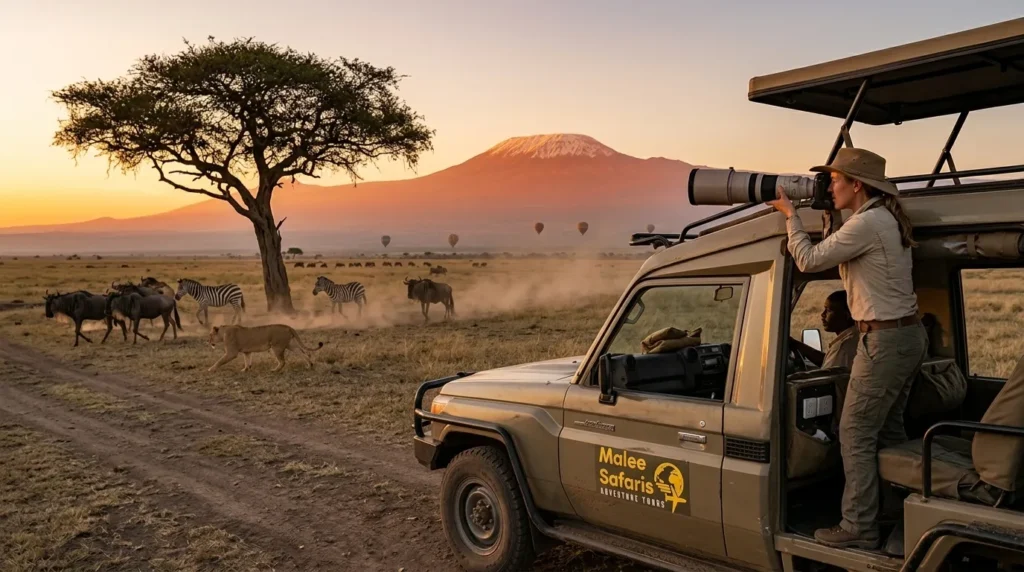
The Best Photography Safari Camps in Kenya: A Photographer's Guide for 2026
The right camp is everything. The right vehicle, the right guide, the right light. This is Kenya through the lens of those who know it best.
Choosing the right photography safari camp in Kenya is the single most important decision a wildlife photographer can make. Kenya's landscapes, wildlife density, and quality of light are incomparable. But the difference between a mediocre set of images and a portfolio-defining trip often comes down to the camp: its position within the ecosystem, the design of its game vehicles, the training of its guides, and whether it allows the flexibility to stay with a subject until the light is exactly right. This guide covers the best photography safari camps in Kenya across the Masai Mara, Amboseli, and Samburu ecosystems, with verified, fact-checked details on exactly what each property offers photographers, from beanbag-equipped vehicles and dedicated photo studios to underground hides and private conservancy access.
Why Kenya is the World's Greatest Wildlife Photography Destination
Wildlife photographers argue endlessly about the merits of Botswana, Tanzania, South Africa, and Namibia. But Kenya holds a combination of qualities that no other destination fully matches. The Masai Mara has the highest density of predator species per square kilometre of any ecosystem on earth. Amboseli offers the single most photographed subject in all of African wildlife: elephant herds silhouetted against the snow-capped peak of Kilimanjaro. Samburu's unique northern species, the reticulated giraffe, Grevy's zebra, and the long-necked gerenuk, are found nowhere else in the same accessible, photogenic setting.
Beyond subject matter, Kenya's golden-hour light, particularly in the Masai Mara between June and October, produces the warm amber tones that define the finest East African wildlife images. The dust of the dry season, the dramatic storm clouds of the green season, and the vivid emerald grass of the rains all create entirely different photographic conditions within a single year. A Kenya photography safari is not one experience. It is dozens, depending only on when you go and who guides you there.
Trai Anfield, BBC Filmmaker and Wildlife Photographer
What Makes a Camp Truly Photographer-Friendly?
Not every camp that claims to be "photographer-friendly" actually is. Here are the specific features that genuinely matter for producing outstanding wildlife images, and that separate the best photography safari camps in Kenya from those that simply mention it in their brochure.
Purpose-Built Photography Vehicles
The vehicle is your studio. A true photography vehicle is open-sided with a roll-back canvas roof, allowing you to shoot at 360 degrees without obstruction. It should have beanbags fitted to the roof and window frames for lens support, power inverters for charging camera batteries on long drives, and enough space between seats so long telephoto lenses (400mm+) can be raised and lowered freely. Kicheche Camps, for example, operates open-sided Land Cruisers with plug socket strips and inverters, beanbags, large side windows, and rollback canvas roofs across all their properties. Their photography vehicles go further, with one side of the vehicle dropping down entirely, allowing photographers to lie flat and shoot at ground level.
KPSGA-Certified Guides Trained in Photography Positioning
A photographic guide understands that positioning the vehicle is 50 percent of the image. They position with the sun behind the vehicle during the golden hour, approach subjects from downwind to avoid disturbing them, and hold position at a sighting for as long as the animal remains calm rather than driving from sighting to sighting. All Kicheche guides are at minimum Silver-certified by the Kenya Professional Safari Guides Association (KPSGA), and are specifically trained in understanding light, positioning, and animal behaviour for photographic purposes. This standard should be the benchmark when evaluating any Kenya photography safari camp.
Private Conservancy Access
National park rules in Kenya prohibit off-road driving and restrict game drives to daylight hours. Private conservancies surrounding the Masai Mara have no such restrictions. Off-road driving allows you to position a vehicle directly alongside a subject rather than shooting from a designated track. Night drives allow for low-light photography of nocturnal species, rarely possible in the national reserve. For serious photographers, a camp inside or adjacent to a private conservancy is non-negotiable.
Flexible Game Drive Schedules
The golden hours of sunrise and late afternoon are when light is most flattering and wildlife is most active. The best photography camps impose no time limits on game drives, allowing photographers to remain with a subject from first light until it moves on, rather than returning to camp for a set breakfast time. Camps that run fixed 6am to 10am and 4pm to 7pm drives are not optimised for photography.
Best Photography Safari Camps in Kenya: Masai Mara
The Masai Mara is the heart of any Kenya photography safari. Its rolling grassland, dense predator population, and the annual Great Wildebeest Migration from July to October make it the single most productive location for wildlife photography on earth during peak season.
Kicheche Bush Camp
Kicheche Bush Camp is Kenya's most consistently recommended camp for serious wildlife photographers and is part-owned by award-winning photographer Paul Goldstein, whose influence is evident in every detail of how the camp approaches game drives. Located in the 30,000-acre Olare Motorogi Conservancy bordering the Masai Mara National Reserve, it has traversing rights shared with only a handful of other small camps, guaranteeing low vehicle density at every sighting.
The camp's six tents accommodate a maximum of 12 guests, creating an intimate atmosphere where game drives can be structured entirely around photographic opportunity rather than compromise. Vehicles are open-sided, open-roofed Land Cruisers fitted with beanbags, lens platforms, and power inverters for battery charging. The dedicated photography vehicle allows one side to drop flat, enabling ground-level shots of predators and plains game. All guides hold KPSGA Silver or Gold certification and are specifically trained in photographic positioning and light management.
The Olare Motorogi Conservancy offers off-road driving and night drives, both prohibited in the national reserve. During migration season (July to October), full-day excursions into the main reserve for river crossing photography are available at an additional charge. Kicheche's professional photography guide Paul Goldstein visits regularly and leads dedicated photography weeks at the camp throughout the year.
Kicheche Mara Camp
Kicheche Mara Camp operates in the Mara North Conservancy, one of the Mara ecosystem's most exclusive and wildlife-rich zones. With only nine tents and no fences, the camp is positioned directly overlooking the Olare Orok stream and the game-filled plains that border it. Like all Kicheche properties, vehicles are open-sided with beanbags, lens platforms, and power inverters, and guides are trained specifically in photography positioning.
The Mara North Conservancy is positioned on the northern boundary of the Masai Mara National Reserve and provides access to areas that see virtually no tourist vehicles outside of Kicheche's own fleet. BBC film-maker and wildlife photographer Trai Anfield has used Kicheche Mara as a base for Great Migration photography safaris, noting the conservancy's combination of exclusive access and proximity to the Mara River crossing points. Camera rental, tutorials, and a dedicated photography vehicle are all available at additional cost.
Angama Mara
Angama Mara sits on the Oloololo Escarpment, 500 metres above the Masai Mara floor, in the precise location where the opening scene of Out of Africa was filmed. The view from the camp looks directly down across the entire Mara Triangle, which means every morning begins with the most dramatic photography vantage point in the Mara ecosystem. Guests descend to the valley floor via a steep track, reaching the action in the Mara Triangle within 20 to 45 minutes of leaving camp at first light.
What makes Angama uniquely suited to photographers is its dedicated on-site photography studio, run by a resident professional wildlife photographer. The studio offers equipment rental, image editing and printing facilities, one-on-one photography tuition sessions, and private photographic rental gear. No other camp in Kenya's Masai Mara offers a comparable on-site resource for photographers. Kenyan photographer Mutua Matheka and a team of four professional photographers who visited during the Migration described it as having "everything just come together" for creating exceptional images.
The camp has private access to sections of the Mara Triangle, allowing game drives with minimal other vehicles. The Mara Triangle is the western section of the national reserve and is managed separately from the main reserve, with stricter vehicle limits. For aerial photography, Angama's position on the escarpment provides extraordinary sunrise shots looking down across the valley below.
Governors' Camp
Governors' Camp is one of the oldest and most respected safari operations in the Masai Mara, established in 1972 on the banks of the Mara River within the national reserve itself. Its position directly on the river is its defining photographic advantage: hippos, crocodiles, monitor lizards, and riverine forest leopards are accessible within minutes of leaving camp. During migration season, the river crossing points closest to Governors' Camp are among the most productive in the entire reserve for crossing photography.
Governors' Balloon safaris are the only operation that spends the majority of their flight path directly over the Mara River, providing aerial photographers with the rare opportunity to shoot wildebeest and hippos from river level during the flight. The camp's resident naturalist and photographer produces a monthly photography highlights blog that provides genuine insight into conditions on the ground. Vehicles are fitted with camera supports and spacious seating for photographers. Being inside the national reserve means off-road driving is not permitted, but the Mara River's wildlife density compensates significantly.
Best Photography Safari Camps in Kenya: Amboseli
Amboseli National Park produces one of the most iconic wildlife photographs available in Africa: a close-up elephant in sharp focus with Mount Kilimanjaro rising behind it. This shot requires two specific conditions: an elephant close enough to the road, and Kilimanjaro free from cloud. Both occur most reliably in the early morning, and most frequently between December and March when post-rain air clarity is at its best.
Tortilis Camp
Tortilis Camp sits in the Kitirua Conservancy adjacent to Amboseli National Park, offering photographers access to both the park itself and the conservancy's private traversing area. The conservancy's position gives views directly toward Kilimanjaro across open swamp plains, where the park's famous elephant herds gather at the water's edge in morning light. The combination of foreground swamp grass, mid-ground elephants, and the mountain backdrop creates compositional layers that professional wildlife photographers travel specifically to capture.
Tortilis vehicles are purpose-built for photography with pop-up roof hatches, beanbag support, and guides who understand that a missed morning can mean a missed week of Kilimanjaro clarity. The camp has been visited by numerous wildlife photographers and is consistently rated among the top Amboseli properties for photographic productivity. Walking safaris with Maasai guides are available for close-up detail photography of insects, reptiles, and smaller mammals.
Best Photography Safari Camps in Kenya: Samburu
Samburu offers species that photographers cannot find anywhere else in Kenya. The Samburu Special Five, including the reticulated giraffe, Grevy's zebra, and the gerenuk (which stands on its hind legs to browse), provide unique photographic subjects against a dramatically different landscape of dry doum palm savannah and the Ewaso Nyiro River.
Elephant Bedroom Camp
Elephant Bedroom Camp is named for the most remarkable thing about its location: wild elephant herds regularly walk directly through and past the camp itself, providing photographers with intimate, ground-level elephant photography from their own tent veranda without needing a vehicle. The camp sits on the banks of the Ewaso Nyiro River, where elephants, crocodiles, hippos, and an extraordinary variety of birdlife concentrate at the water's edge. Its position in Samburu National Reserve gives direct access to all five of the Samburu Special species and to the resident elephant herds that have been studied and documented by the Samburu Elephant Research Project for over two decades.
This is Kenya's most frequently referenced photography safari camp in Samburu. Chris Bray Photography's 2026 Kenya tour specifically highlights Elephant Bedroom as the Samburu accommodation of choice, noting it as the property where "elephants walk right past" your tent. The Chris Bray 2026 Kenya photography tour itinerary also includes special access to "Craig," Kenya's largest living tusker elephant, whose documented territory encompasses the Samburu area.
Best Destinations for Each Photography Subject in Kenya
Kenya's photographic diversity is one of its greatest advantages. Different parks produce different subjects, and the best photography safari itinerary in Kenya is built around what you most want to shoot.
Big Cats
Masai Mara. Highest cheetah and lion density anywhere in Africa. Year-round sightings, with peak activity during Migration July to October when prey is abundant.
Elephants + Kilimanjaro
Amboseli. The definitive elephant photography location. December to March for clearest mountain views. Largest elephant herds in Kenya. Swamp settings.
Birds (1,100+ Species)
Lake Nakuru, Lake Naivasha, Masai Mara. November to April for migratory species in full breeding plumage. Kenya held the world 24-hour bird count record for 28 years.
Unique Species
Samburu. Reticulated giraffe, Grevy's zebra, gerenuk, Beisa oryx, Somali ostrich. Species not found in the Mara or Amboseli.
Great Migration
Masai Mara, Mara River crossings. July to October. Two million wildebeest and zebra. River crossings: August and September typically the most dramatic months.
Landscape and Aerial
Oloololo Escarpment (Angama Mara), Rift Valley, Great Rift Valley lakes. Hot air balloon safaris over the Mara. Helicopter flights over Lake Magadi flamingos.
What Camera Gear to Bring on a Kenya Photography Safari
The following is a fact-checked gear guide based on recommendations from professional photographers who have shot in Kenya's specific conditions.
| Item | Recommended Specification | Why It Matters in Kenya |
|---|---|---|
| Telephoto lens | 400mm to 600mm f/4 or f/5.6 | Big cats and birds require long reach. The 500mm or 600mm is the standard choice for serious Mara photographers. |
| Mid-range zoom | 70-200mm f/2.8 | Elephants in Amboseli, river crossings, and herd shots where subject fills more of the frame. |
| Wide angle | 16-35mm or 24-70mm | Landscape shots of the escarpment, in-vehicle environmental shots, and balloon photography. |
| Camera body | Weather-sealed DSLR or mirrorless, minimum 20MP | Dust is significant in dry season. Green season rain requires weather sealing. High ISO performance for low-light dawn and dusk shooting. |
| Memory cards | Minimum 4 x 128GB cards | A Migration river crossing can produce 2,000+ images in a single morning. Never run out of storage on a once-in-a-lifetime event. |
| Spare batteries | Minimum 3 per body | Cold mornings and high-volume shooting drain batteries fast. Camp charging is available but full-day drives require spares. |
| Beanbag | Large format, unfilled (fill with rice on arrival) | Even camps with supplied beanbags benefit from your own perfectly shaped support. Fill with local rice, empty before flying. |
| Rain sleeve | Camera-specific weather cover | Green season photography requires protection during brief showers. Post-rain light is the best of the year. Never stop shooting for rain. |
Pro Photography Tips for Your Kenya Safari
Shoot at Golden Hour, Every Day Without Exception
The first 45 minutes after sunrise and the last 45 minutes before sunset produce the warm amber light that defines the finest Kenya wildlife images. This requires leaving camp before dawn and staying in the field until the light fails. Choose camps that support this schedule without fixed return times.
Stay with One Subject Longer Than You Think You Need To
The most experienced Kenya photographers consistently advise staying with a single animal or group for an extended period rather than moving from sighting to sighting. A cheetah resting at midday may hunt at 3pm. A leopard in a tree may descend at dusk. The behaviour happens to photographers who wait, not those who leave.
Use the Green Season for Different Images
The most original Kenya wildlife images come from the green season, when lush backgrounds, dramatic storm clouds, and post-rain light create conditions impossible to replicate in the dry season. Fewer photographers visit during this period, which means your images will stand out from the thousands shot in the same golden-hour conditions in July and August.
Photograph Behaviour, Not Just Animals
A lion staring at the camera is a record shot. A lioness making eye contact with a buffalo 200 metres away is a story. Train yourself to photograph behaviour: a mother elephant disciplining a calf, a cheetah's eyes fixed on prey, a secretary bird mid-strike. Behavioural images win competitions. Static portraits fill hard drives.
Request Exclusive Use of Your Vehicle
Even in camps that allow multiple guests per vehicle, exclusive use of a private vehicle is almost always available at an additional daily rate. For serious photographers, this is the most valuable upgrade possible: no waiting for other guests, no compromise on positioning, and the ability to return to a subject at any time.
Frequently Asked Questions: Photography Safari Camps in Kenya
July to October is peak season for Mara photography, coinciding with the Great Wildebeest Migration and the highest predator activity of the year. January to February offers excellent photography with lower rates, shorter grass for easier sightings, and fewer vehicles. The green season (November to December, March to May) produces the most original images: dramatic skies, vivid green backgrounds, and newborn animals. The Kenya green season guide covers this in detail.
The four critical factors are: open-sided vehicles with beanbags and power inverters, KPSGA-certified guides trained specifically in photographic positioning, private conservancy access that allows off-road driving and night drives, and flexible game drive schedules with no fixed return times. The best photography safari camps in Kenya, such as Kicheche and Angama Mara, meet all four criteria.
Yes. Angama Mara offers on-site photographic equipment rental through its dedicated photography studio. Kicheche Mara Camp also offers camera rental and tutorials. In Nairobi, specialist photography equipment rental is available for visitors who want to supplement their kit without the weight and airline charges of bringing professional-grade lenses from home. Ask Malee Safaris to arrange equipment rental as part of your itinerary.
They are different. The Masai Mara is the better choice for big cat photography, the Great Migration, and the widest variety of subjects. Amboseli is unmatched for elephant photography with Kilimanjaro as a backdrop. The best Kenya photography safari combines both within a single itinerary of 7 to 10 days.
A dedicated photography safari using camps like Kicheche or Angama Mara costs from $4,500 to $9,000 per person for 7 to 10 days, including internal flights, accommodation, and game drives. Exclusive vehicle use adds $150 to $300 per day depending on the property. Photography week packages led by resident professional photographers (such as Paul Goldstein's Kicheche workshops) range from $5,700 per person for 8 to 9 days. Contact Malee Safaris for a tailored quote.
Book Your Kenya Photography Safari with Malee Safaris
Every detail matters when photography is your goal. Malee Safaris builds photography safari itineraries around the camps, guides, vehicles, and timing that produce exceptional images, not just great holidays.
Plan My Photography Safari →Or browse our safari packages to find the right starting point.